
12 Feb 2026
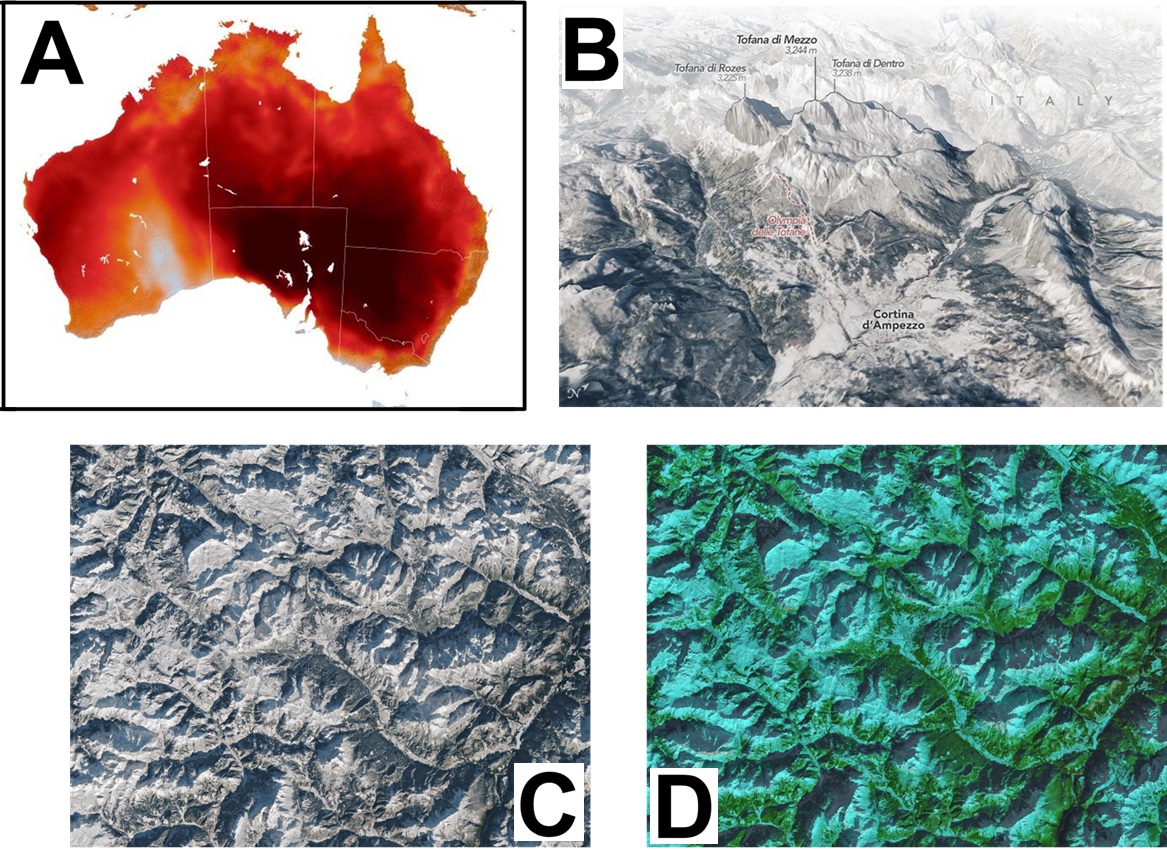
These Landsat images show Cortina and its surrounding alpine terrain in natural color and false color. The band combination (6-5-4) highlights areas of snow (light blue), while steep, mostly snow-free cliffs stand out as areas of light brown, and forests appear green.
Locations across the Italian Alps join Cortina in hosting the snow sports, which also include cross-country skiing, ski jumping, ski mountaineering, and snowboarding. As with many past Olympics, the 2026 Winter Games are manufacturing snow at the various venues to ensure consistent conditions. New high-elevation reservoirs were created to store water for snowmaking, according to reports. Automated systems are being used to limit snow production to the minimum amount required, and most snowmaking operations are being powered by renewable energy, the International Olympic Committee said.
Snowfall in northern Italy was below average at the start of the season, but a storm on February 3—three days before the opening ceremony—eased some of the need for snowmaking. Still, snow coverage and the ability of Winter Olympic venues to maintain consistent conditions are areas of concern as global temperatures rise. Researchers studying the issue have suggested several ways to address this, including holding competitions at higher elevations, choosing regional or multi-country hosts, and shifting the Paralympic Games from early March to January or February when it’s typically colder and snowier.
[Image]
(A) February 11, 2026
(B) January 27, 2026 (natural color)
(C) January 27, 2026 (false color)
(D) January 27, 2026 (natural color)