
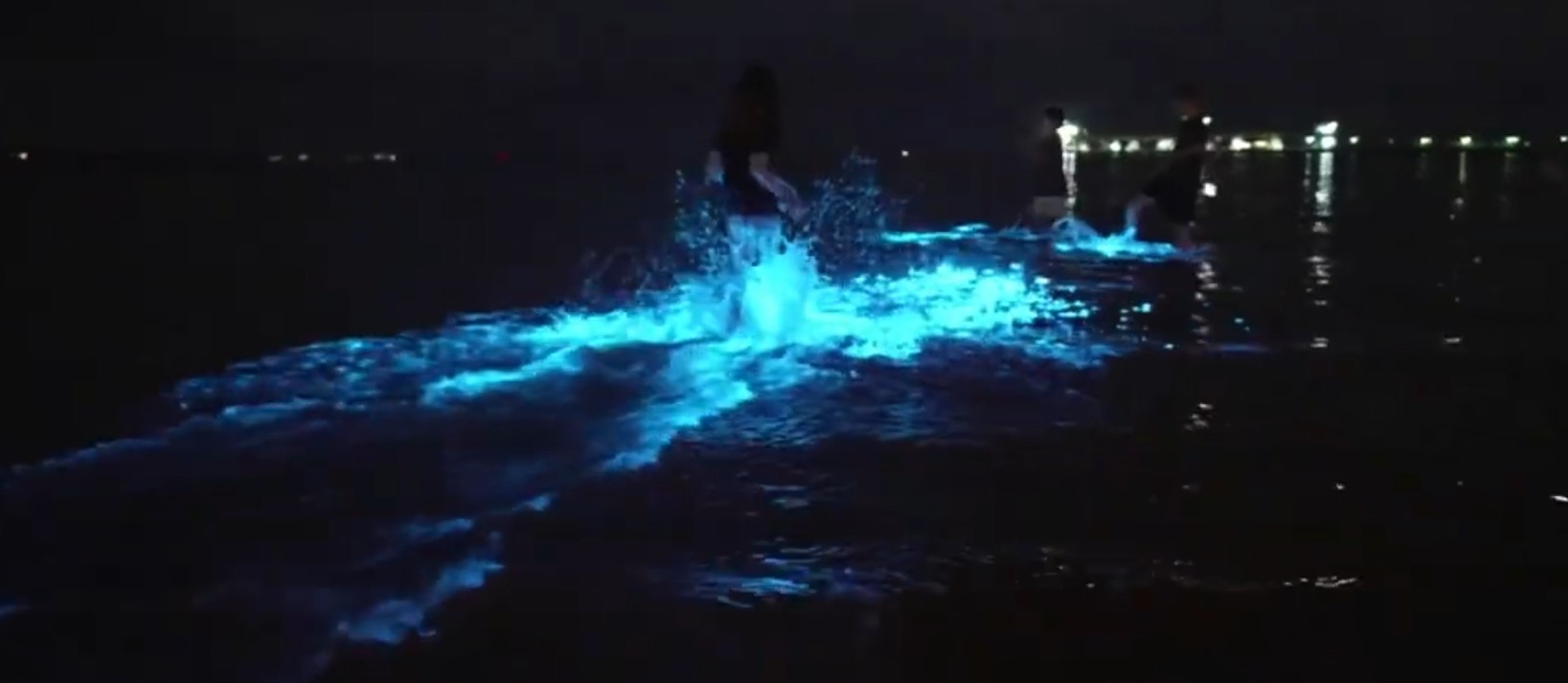
Photo :webshot.
October 20, 2025
Anna Murray
The sands and waters along Australia’s beaches often glow with a mesmerizing electric blue light — a natural phenomenon known as bioluminescence. These glittering algal blooms occur when certain types of algae emit light through a chemical reaction, which becomes especially active after rainfall.When disturbed by movement — such as waves, swimmers, or passing boats — the algae produce this ethereal blue glow as a defensive mechanism. The bioluminescence may startle predators or attract larger ones to prey on the algae’s attackers.
The algae themselves are not believed to be harmful to humans, though they can endanger fish by reducing the oxygen content in the surrounding water due to their high ammonia concentrations, which are the result of an inorganic compound made of hydrogen and nitrogen.Australia’s best-known bioluminescence hotspots include Tasmania, Victoria, and New South Wales. At night, places like St Kilda Beach near Melbourne dazzle visitors with their unearthly blue shimmer, while Jervis Bay, located about three hours south of Sydney, is considered one of the most famous and spectacular locations to witness this magical natural display.