
29 Oct 2026
This October, five rural schools across Yuma County partnered with Smithsonian STARS (Scientists Taking Astronomy to Rural Schools) to bring hands-on astronomy learning into their classrooms, marking the first phase of the program’s statewide Arizona rollout.
The participating schools are Dateland Elementary School in Dateland, Mohawk Valley School in Roll, Antelope Union High School and Wellton Elementary School in Wellton, and JD Price Elementary School at Yuma Proving Ground.
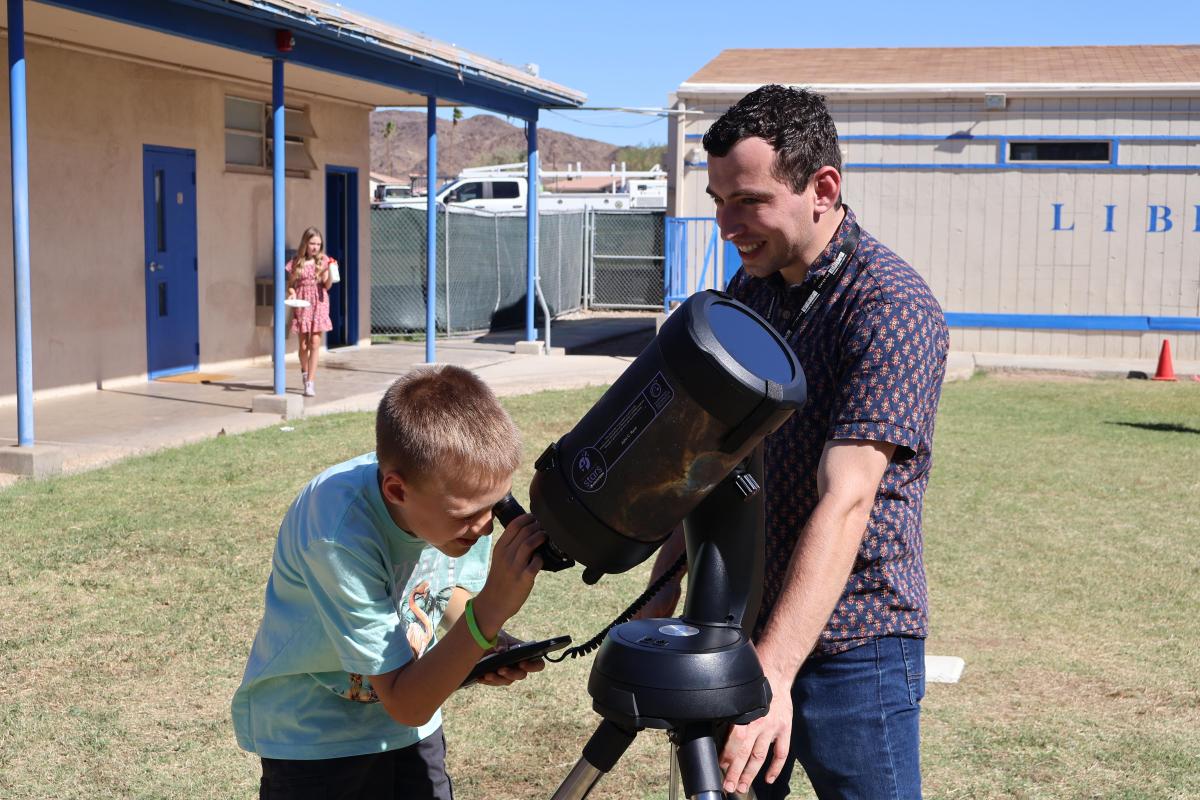
Through STARS, the participating schools received a Celestron NexStar 6SE telescope, standards-aligned K–12 lessons and educator training to help bring astronomy instruction into their classrooms. During visits to the schools from October 13–16, the STARS team worked alongside educators to familiarize them with the telescopes and conduct hands-on astronomy activities with students. Following the visits, STARS will continue to support participating educators as they incorporate the program’s lessons and telescope activities into their classrooms.
Across the five schools, approximately 300 students and seven educators took part in activities during the visits. As educators begin using the telescopes, lessons and other resources at their schools, nearly 700 students will have opportunities to participate in astronomy learning.
“I’m so excited and happy for this opportunity,” said Brenda Findley, a third through fifth grade teacher at JD Price Elementary school. “When the telescope came to the classroom, we were able to put it together. The students couldn’t wait to use it.”
For students in Yuma County, the program offers an opportunity to connect classroom science with the night sky around them by exploring objects such as the Moon, planets, stars, galaxies and nebulae using real astronomical equipment.
“Astronomy has a remarkable ability to spark curiosity and inspire students to explore broader STEM learning,” said Dr. Emma Marcucci, Executive Director of Smithsonian STARS. “Rural Arizona’s clear, dark skies are a tremendous natural resource. With the right support, these skies can turn into classrooms for discovery. Our goal is to empower educators to create meaningful, hands-on science experiences rooted in the remarkable skies that students can see from their own communities.”
Beyond the school visits, members of the STARS team also participated in an evening star party hosted by the Yuma Astronomy Club. The event drew around 75 attendees, which included students, educators, and members of the local community. Attendees had the opportunity to explore the night sky and observe the Moon and other celestial objects through a STARS telescope.
Arizona: The First Chapter
Arizona is the first state in the country where Smithsonian STARS has launched. Following a pilot with schools in Southeast Arizona in spring 2026, the program began the first phase of its statewide Arizona rollout with Yuma County. STARS is expected to expand to additional counties across Arizona in the coming months.
Following its work in Arizona, Smithsonian STARS plans to launch operations in Delaware and Rhode Island later this school year, with additional states to follow as the program grows. Its long-term goal is to reach rural schools in every state across the country.
[Image]
A student at JD Price Elementary School looks through the STARS telescope, as STARS team member Jason Gurtman looks on.