
30 Sep 2026
Designed and built by JPL, the instrument will test cutting-edge technologies for directly imaging planets around other stars.
On Sept. 22, NASA’s Nancy Grace Roman Space Telescope’s Coronagraph Instrument opened its eyes to cosmic light for the very first time.
Designed and built by NASA’s Jet Propulsion Laboratory in Southern California, the coronagraph will demonstrate cutting-edge technology to block starlight and view planets and dusty disks around nearby stars.
The instrument woke up on Sept. 1 and stretched its digital, electronic, and mechanical “limbs” mid-month. Once the team confirmed that the fine-guidance system was holding the Coronagraph Instrument steady, scientists adjusted the focus so it could take its first bleary-eyed look at space that will help scientists fine-tune the instrument’s view.
“This observation confirms that the instrument can produce a focused image,” said Vanessa Bailey, a Roman Coronagraph Instrument scientist at NASA JPL. “It’s a very limited test that kicks off a methodical process of increasingly complex tasks that help us prepare for the instrument’s future observations.”
[Image]
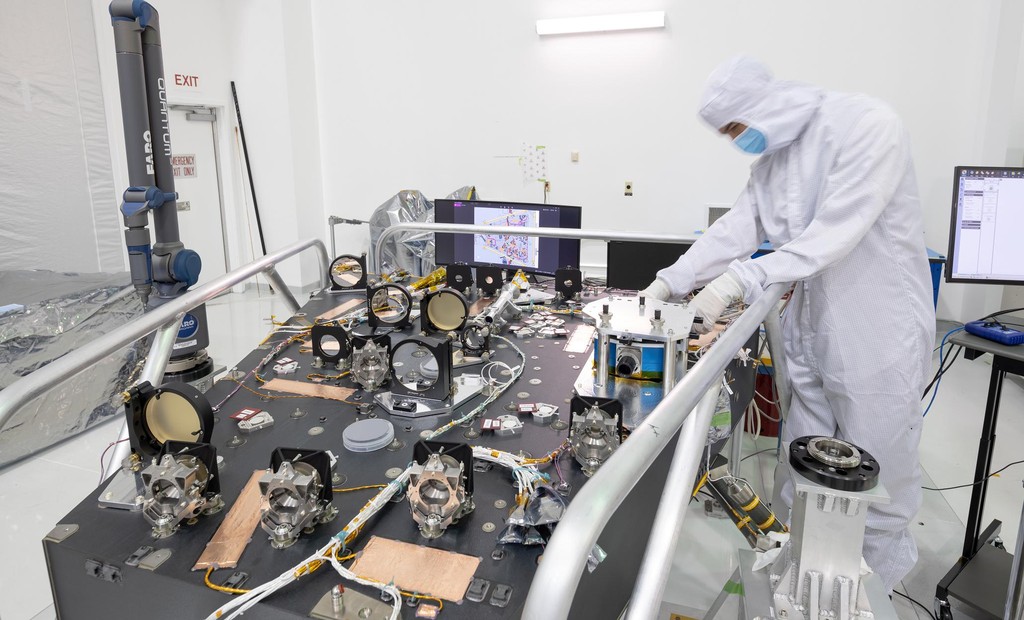
The Coronagraph Instrument on NASA’s Nancy Grace Roman Space Telescope, shown here in 2022 during its assembly at NASA’s Jet Propulsion Laboratory, successfully turned on its cameras for the first time in space on Sept. 22, 2026.